Balance training
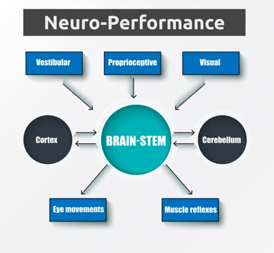
Balance training is a logical solution for somebody with dizziness, vertigo or concussion, since balance is a function of the brain. It is important to remember that the brain works as an input-processing-output model, whereby the senses of vision, proprioception and vestibular, are all processed to enable an output to the muscles. This simplified model explains how balance is achieved.
For example, when a sense of movement is provided to the brain, the brain responds by telling the muscles how to react so as to avoid falling. One way to improve the brain’s function in this area is to quite simply – do balance exercises.
Balance exercises can start with simply standing with the feet together, or by standing on one leg. They can be progressed by standing on a soft mat, by moving the head into various positions, or by moving the eyes away from the initial reference point! The choices to modify your balance training are endless.
The ability to improve balance is inherent in all of us, whereby novel environments and challenging situations, along with a little bit of sheer determination, will provide the perfect setting for the brain to improve.
The first step is to MEASURE your balance, which can be done using a force-plate (read more about assessment instruments). From a carefully interpreted balance assessment, the assessor can determine the impaired region of the balance-model e.g. vision, proprioception, muscles, brain processing speed.
The aim then is to specifically and independently improve the regions that are most dysfunctional and then train the regions to integrate together in functional exercises.
When performing balance training, it is important to minimize risk factors and ensure the exercise is performed within a safe environment and/or with supervision when required e.g. in a well-lit area with minimal trip hazards and rails/benches to assist when needed.
The key is consistency with training, and of course, the best way to prevent balance decline is to STAY ACTIVE!