Categories of concussion
Categories of concussion
As discussed in the previous article, concussions are as unique as a fingerprint. Every brain is wired in a way that is specific to the individuals’ development and experiences. We all have different environments we live in, unique personalities, underlying health concerns, different social conditions, and different expectations about how our brains should function.
However, in a condition so complex, we need to have an organized thought process around concussion, to enable us to better assess and understand what’s wrong.
The first step is to break it down into sections
To tackle the complex task of assessing a concussion, it will help to divide the condition into smaller categories and look at one at a time.
In 2019, researchers from Stanford university reviewed 3000 articles about concussions, published between 1990 and 2017 (1). This review concluded that amongst all the research over the past 27 years, there are 5 main categories of concussion that should be recognized when evaluating the injury. The categories can be referred to as subtypes, and they include:
- Cognitive
- Headache/migraine
- Oculomotor
- Vestibular
- Anxiety/mood
There were also two conditions recognized, not as subtypes, but as associations with a concussion, and they are:
- Sleep disturbance
- Cervical strain

These subtypes represent the broad categories of concussion. Some people will have various symptoms from each category, whilst others may only have symptoms from one. This is the nature of concussion – there is no one rule that fits all.
Of course, each category is a specialty unto itself, with never-ending depths of information and complexity. And of course, within each category, there are professionals who dedicate an entire life’s work to becoming masters of each specialty.
Let’s have a look at the prevalence of these symptom categories, as illustrated by the previously mentioned research article (1).

As can be seen in the diagram, the most prevalent symptoms in adults fall within the cognitive category, whereas the most common symptoms in paediatric group lie within the headache/migraine category.
Expanded information about each category is listed below:
Cognitive
Research in 2004, published in the Journal of the international neuropsychological society (1), reported that those people who felt “brain fogginess” 1 week after a head injury had an increased likeliness of persistent slower reaction times, decreased processing speed and reduced memory performance. The cognitive performance problems experienced by concussion victims are explained partly by the “neurometabolic cascade”, a term given to the series of events that result in altered levels of neuron transmission and subsequently, altered levels of certain brain functions.
Traditionally, analysis of concussions has shown that only 15% of people with a single concussion will go on to experience further cognitive symptoms after 1 year, however, in contrast, that that, a study in 2017 reveals that a much larger portion of people are likely to experience ongoing symptoms of learning/memory, attention, processing speed and executive function. The study goes on to state that previous figures have given a “gross underestimation of the true incidence” of ongoing symptoms, and this is at least partly due to inaccessible testing opportunities. (2)
Headache and migraine
The second most prevalent category of symptoms is headache and migraine. Persistent post-traumatic headache is referred to as a secondary headache that is ongoing for more than 3 months after a head injury. It is a common presentation following a concussion. The most frequent types of headaches are migraine-like and tension-like headaches, which closely resemble primary headaches. Although migraine and post-traumatic headaches have different features on neuroimaging, their clinical presentations are much the same. Treatment for headaches could come in the form of abortive or prophylactic medications, manual therapy, trigger point injections, or transcranial magnetic stimulation (TMS), to name a few. (3)
Oculomotor
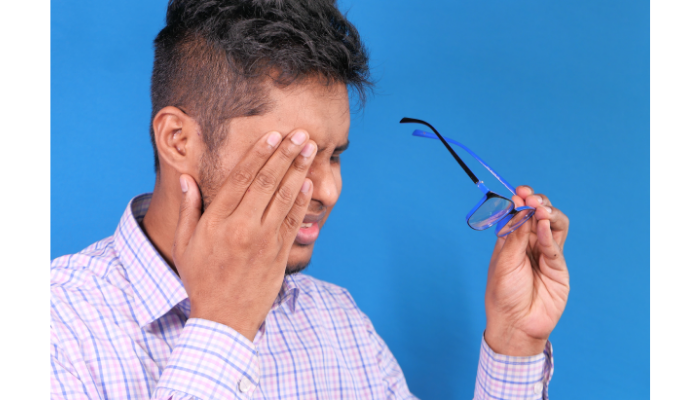
Visual disturbances (or oculomotor) generally have to do with the brains’ control of the eyes, rather than problems with the eyes themselves. Think of the eyes as the camera, and the brain as the cameraman. Often a client will see the optometrist after a concussion, only to be told that the eyes are normal.
Complaints of poor visual focus, tiredness when reading and sensitivity to light are all common features of concussion, but this can be attributed to poor control of the eye muscles, as opposed to problems with the eye itself. There is also the tendency for visual stimulus to overwhelm the inflamed and fatigued brain.
When you think about it, the brain has a lot of fast calculations to do when it must control the exact position of two eyes following a target, all the whilst taking into account the motions of the head and body. Control of the eye motion is largely reliant on parts of the brainstem, called nuclei (shown in the diagram below), which during a head injury, are very vulnerable to shearing and rotational forces. Disruption to the delicate regions of the brainstem can cause disruption to the finely tuned elements of eye control, and hence cause visual disturbances in a large proportion of concussions.

Vestibular
Vestibular symptoms refer to the symptoms of dizziness or vertigo. These symptoms can come from the inner ear of the brain itself and can range from a sense of mild “swaying” or “rocking”, to the acute sensation of rotation or “spinning”. It is not uncommon for somebody to develop BPPV after a concussion, whereby tiny crystals in the inner ear are dislodged, causing disruption to the delicate motion sensors of the vestibular system. BPPV is an example of a peripheral vestibular disorder, peripheral referring to “outside” the brain.
But there are several other reasons why somebody may feel dizzy, and some of this has to do with the ability of our brain to process the three important senses – vision, vestibular, and proprioception (see the diagram below). Consider your brain to be a processor, and the senses to be like software programs running in alignment on your computer. If the processor is not powerful enough to run all 3 programs at once, you might expect those programs to start freezing – and perhaps you could imagine this to be a moment of dizziness. This problem is referred to as a central vestibular problem, where “central” refers to the brain.
Labyrinthine concussion refers to another type of diagnosis which is relevant to this discussion and refers to auditory and/or vestibular problems following a head injury, where there has been no bony fracture. The exact mechanisms of this condition are still poorly understood. (4)
 Cerebellum. BRAIN-STEM. Ocular muscles. Postural muscles.
Mood disorder
Mood disorders may seem obvious with a head injury, but specifically, these symptoms of emotional distress, are attributable not only to the psychological challenges of injury debilitation but also to the neurometabolic changes that occur during concussion. More specifically, mood disorders can come in the form of hypervigilance, anxiety, panic, depressed mood, and apathy. Advanced neuro-imaging reveals that these changes exhibit similar presentations to that of the brain which is clinically depressed (5). There is also evidence towards concussion causing a disturbance in the neuromodulators serotonin and dopamine, both of which are linked to mood disorders and both of which can affect the perception of wellbeing, the psychosomatic influence on recovery, and the quality of our sleep.
Sleep disturbance
That brings us directly to the topic of sleep. Perhaps sleep should have been discussed first since sleep has been recognised as arguably the most important factor for just about every ailment that exists. To put it bluntly, if you’re not getting good sleep, you’re generally not getting better. Sleep is where we restore our mental capacity, re-set our emotional centre, consolidate things we’ve learned, and repair things that are broken. Unfortunately, it is very common for sleep to become broken after a head injury, albeit this is when sleep is needed the most. Poor sleep may occur due to the brain being in a hypervigilant state. This state of “alertness” may be driven by thoughts but is also driven by chemical changes that occur at the level of the neuron. As neurons become damaged they break down and release a substance called glutamate, which is an excitatory neuromodulator. Glutamate turns neurons ‘ON’, and this is not ideal when the brain wants to turn ‘OFF’. The state of over-excitation causes more stress due to the inhibitory effect it has on recovery, a term which has been aptly named excitotoxicity.
Cervical strain
And finally, we cannot leave out the close relationship between the neck and the brain. Whenever there is a force that injures the head or brain, there is very likely the possibility that it has injured the neck and vice versa. This means that every concussion has the potential to include neck damage, and every whiplash-type injury to the neck has the potential to include damage to the brain. The size of the head is quite large, relative to the neck, which makes the neck vulnerable to the momentum of the head. Take whiplash for example, where the sudden change in acceleration of the head will create a large force to the neck, often creating long-term pain and dysfunction to the spine. Interestingly, however, whiplash injuries also create a list of symptoms that are akin to that of concussion. As a matter of fact, the symptoms of whiplash and concussion make them indistinguishable without a physical assessment. It is important to remember that there is a dense cluster of nerve endings in the neck, which give the brain important information about the position of the head. This information is crucial for the brain to enable proper eye movements and muscle contractions (muscles shown below), to stabilize the gaze and the spine. When either the brain or neck are damaged, there can be an influence that causes neck pain, eye movement disorders, dizziness, or headaches, to name a few.

As we have just discussed, there are several categories of concussions, resulting in a multitude of symptoms that can potentially result from forces on the head. As much as we need to categorize these symptoms to address the concussion holistically, we should also remember that each of these categories is linked to one another just as the neurons in the brain are linked as networks. For example, the vestibular system is linked to the oculomotor system, headaches can be linked to cervical problems, mood disorders are linked to sleep disorders and cognitive function, and so on. And for this reason, a concussion therapist must consider not only each category but how each category is tied into the bigger picture. Perhaps there is a key to the puzzle which will unlock some improvement for the patient, however, more than likely it is a more complex matter of getting ALL the “ducks in line”. And of course, then there is the even wider scope of brain function, which incorporates diet, exercise, and the immune system…Let’s not go there right now!!
One can probably imagine that solving the concussion puzzle, often requires a team of communicating specialists rather than just one person, and for this reason, I would urge anyone recovering from a concussion, to ensure they are surrounded by a trusted team.
Regards,
Paul Michael
References
- https://pubmed.ncbi.nlm.nih.gov/31432081/
- https://www.cambridge.org/core/journals/journal-of-the-international-neuropsychological-society/article/abs/relation-between-subjective-fogginess-and-neuropsychological-testing-following-concussion/C6D6A455976A72CB9D38A9FE396B2647
- https://journals.plos.org/plosone/article?id=10.1371/journal.pone.0174847
- https://thejournalofheadacheandpain.biomedcentral.com/articles/10.1186/s10194-020-01122-5
- https://www.ncbi.nlm.nih.gov/pmc/articles/PMC7178453/
- https://www.ncbi.nlm.nih.gov/pmc/articles/PMC5679311/